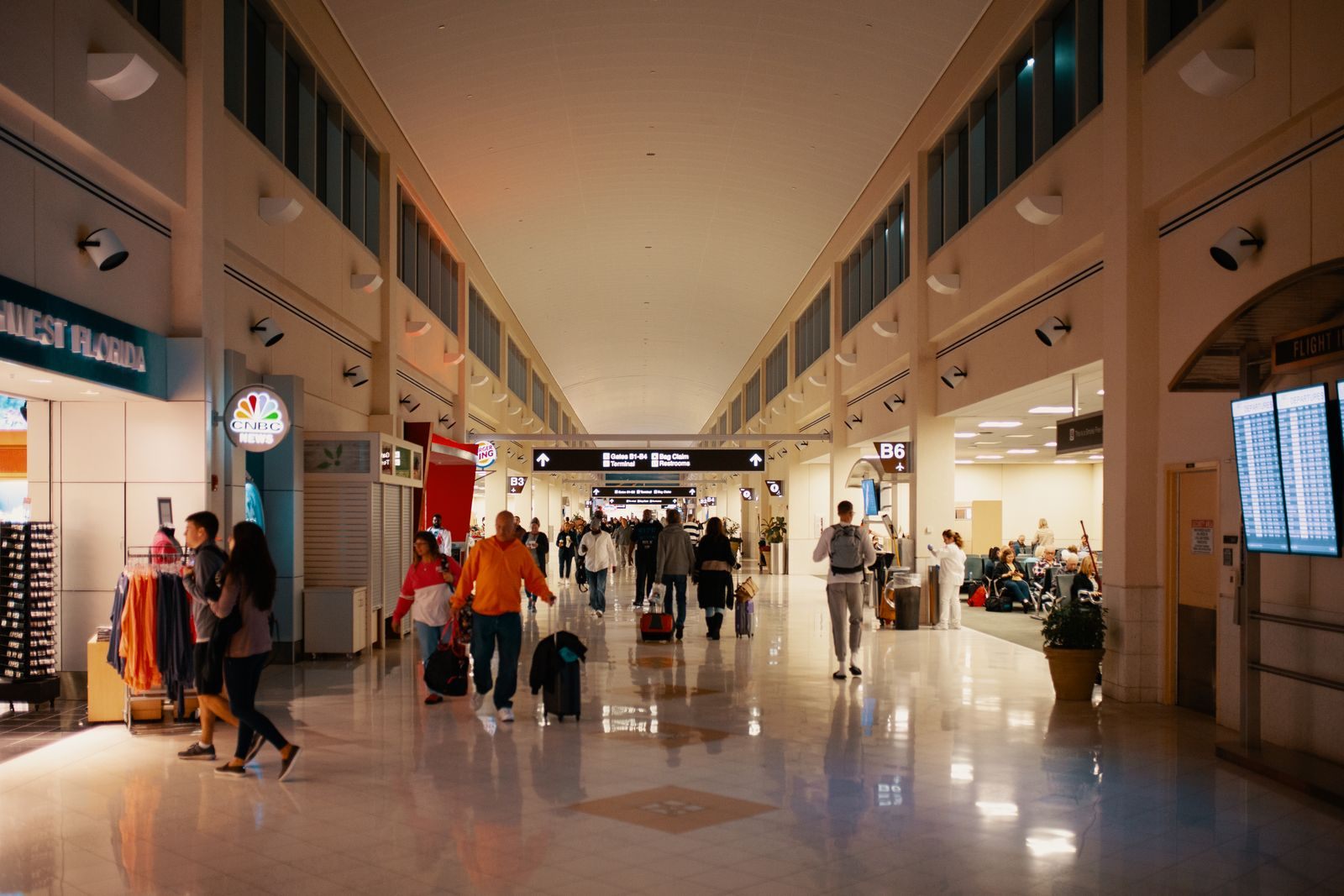
How Early Should I Arrive at the Airport?
Arrival times, the TSA liquids rule, food, batteries and trusted traveler programs.
Ask Mister Travel a QuestionAirport questions top every list: how early should I arrive at the airport, what does the TSA liquids rule allow, can I bring food or a power bank, and is PreCheck or Global Entry worth it? Here is what TSA, CBP and the FAA say.
On this page:
How early should I arrive at the airport?
Short answer: As a rule of thumb, about two hours before a domestic flight and three before an international one; more at busy times or if you are checking bags.
How early should you arrive at the airport? Airlines commonly suggest about two hours before a domestic flight and about three hours before an international flight. Treat that as a starting point and adjust it for your trip.
Arrive earlier when:
- you are checking bags — airlines set check-in and bag-drop deadlines before departure, and missing them means missing the flight;
- you fly at peak times: holiday weekends, early-morning banks of departures, spring break and summer;
- the airport is large or unfamiliar, or you must return a rental car or take a terminal train;
- you are traveling with children, someone who needs assistance, or a pet;
- you do not have REAL ID or another acceptable ID, because identity verification takes extra time.
You can cut it closer when you have only a carry-on, have checked in online, and have TSA PreCheck at a mid-sized airport — though few seasoned travelers regret a coffee at the gate.
Two tools help: the MyTSA app shows recent checkpoint wait times, and your airline’s app shows your gate and any delay. Screening has also become a little quicker: in July 2025 TSA stopped requiring most travelers to remove their shoes.
What is the TSA liquids rule?
Short answer: Liquids, gels and aerosols in carry-ons must be 3.4 ounces (100 ml) or less each, all in one quart-size bag. Medicines and baby food are exempt.
The TSA liquids rule, known as 3-1-1, still applies nationwide: each liquid, gel, aerosol, cream or paste in your carry-on must be in a container of 3.4 ounces (100 milliliters) or less, and all of them must fit in one quart-size, resealable bag per passenger. Anything larger goes in checked baggage.
The size of the container is what counts, not how much is left in it: a half-empty 6-ounce bottle of shampoo will be taken away.
Important exceptions:
- Medications, including liquid prescriptions and over-the-counter medicines, are allowed in larger amounts. Tell the officer and keep them separate.
- Baby formula, breast milk, juice and baby food are allowed in reasonable quantities for a traveling infant or child.
- Duty-free liquids bought abroad may continue on a U.S. connection if they stay in the retailer’s sealed, tamper-evident bag with the receipt (purchased within 48 hours).
Some airports now have CT scanners that let you leave liquids inside your bag at the checkpoint, but the 3.4-ounce limit stays the same. Officials have said the rule is under review; until TSA announces a change, pack to 3-1-1. Check TSA’s liquids page before you fly.
Can I bring food through TSA?
Short answer: Yes. Solid food is fine in a carry-on; anything you can spill, spread or pour follows the liquids rule. Some food cannot cross borders.
Yes, you can bring food through TSA. Solid foods — sandwiches, fruit, cookies, chips, cheese, nuts, granola bars, cooked meals — are allowed in carry-on bags. You may be asked to take food out of your bag so it can be X-rayed separately, so pack it near the top.
Food that you can pour, spread, spray or pump counts as a liquid. That includes yogurt, peanut butter, hummus, salsa, jam, soup, salad dressing and creamy dips. In a carry-on they must be 3.4 ounces or less and go in your quart-size bag; larger amounts go in checked luggage. Frozen foods are allowed if they are frozen solid at screening.
For anything unusual, the TSA “What Can I Bring?” tool gives a yes-or-no answer for hundreds of items, including foods.
Crossing a border is a separate question. Many countries, and the U.S. on your return, restrict fresh fruit, vegetables, meat and dairy products to keep out pests and diseases. Eat it on the plane or declare it on arrival; undeclared food can bring a fine. Bags leaving Hawaii for the mainland also pass an agricultural inspection.
Can I bring a power bank on a plane?
Short answer: Yes, in your carry-on only, never in checked bags. Up to 100 watt-hours is fine; 101 to 160 needs airline approval; above 160 is not allowed.
Yes, but only in your carry-on. Power banks are spare lithium batteries, and the FAA forbids them in checked baggage because a battery fire in the hold is hard to detect and fight. If a gate agent checks your carry-on, take the power bank out first.
Size limits are set in watt-hours (Wh):
- 100 Wh or less — allowed. This covers almost all phone and tablet chargers.
- 101 to 160 Wh — allowed with airline approval, up to two spares per person.
- Over 160 Wh — not allowed on passenger planes.
If only milliamp-hours are printed on it, multiply the amp-hours by the volts: a 20,000 mAh power bank at 3.7 volts is 20 × 3.7 = 74 Wh, under the limit.
Keep it where you can reach it, protect the terminals, and don’t use one that is swollen or damaged. Airlines may set stricter rules — some limit using or charging power banks in flight — so check yours before you go. The FAA PackSafe pages have the full battery rules.
Should I get TSA PreCheck or Global Entry?
Short answer: PreCheck speeds U.S. airport security. Global Entry speeds re-entry from abroad and includes PreCheck, so frequent international travelers usually choose it.
They solve different problems. TSA PreCheck gives you a faster security lane at U.S. airports, where you can usually leave laptops and liquids in your bag and keep on a light jacket and belt. Global Entry, run by U.S. Customs and Border Protection, speeds your return to the United States from abroad through dedicated kiosks or facial-recognition lanes — and it includes PreCheck.
Which to choose:
- Mostly domestic travel: PreCheck is enough. You apply online and visit an enrollment center for fingerprints.
- An international trip or more a year: Global Entry is usually better value, because it covers both. It requires a background check and an interview.
- Frequent trips to Canada or across the Mexican border by land: look at NEXUS or SENTRI, which also include PreCheck benefits.
Both memberships last five years and charge an application fee; check the current fee on the official sites. For families: children 12 and under can use the PreCheck lane with an enrolled parent, but every traveler, including children, needs their own Global Entry membership; CBP does not charge the fee for applicants under 18 whose parent or guardian is a member or applying. Apply only through tsa.gov or the CBP Trusted Traveler Programs site; look-alike sites charge extra.
Security in One Minute
Liquids in containers of 3.4 ounces or less, in one quart-size bag. Food solid, or in small containers if it spreads. Power banks and spare batteries in the carry-on, never the checked bag. REAL ID or passport in hand. Shoes can stay on for most travelers.
When in doubt about an item, check the TSA “What Can I Bring?” tool before you pack it.
Have a Different Travel Question?
Ask Mister Travel personally. Every question is answered personally by email. Some questions and answers may be published on this site (without your name or email); most are not.
Travel Smoother, Start to Finish
A travel specialist can choose flights with sensible connections and plan the rest of your trip. Get free quotes.
Get Free Trip Quotes